Museum Journal
Enhancing Museum Experience Through Personalised Digital Exploration
Individual Project
Project duration: 4 months
Introduction
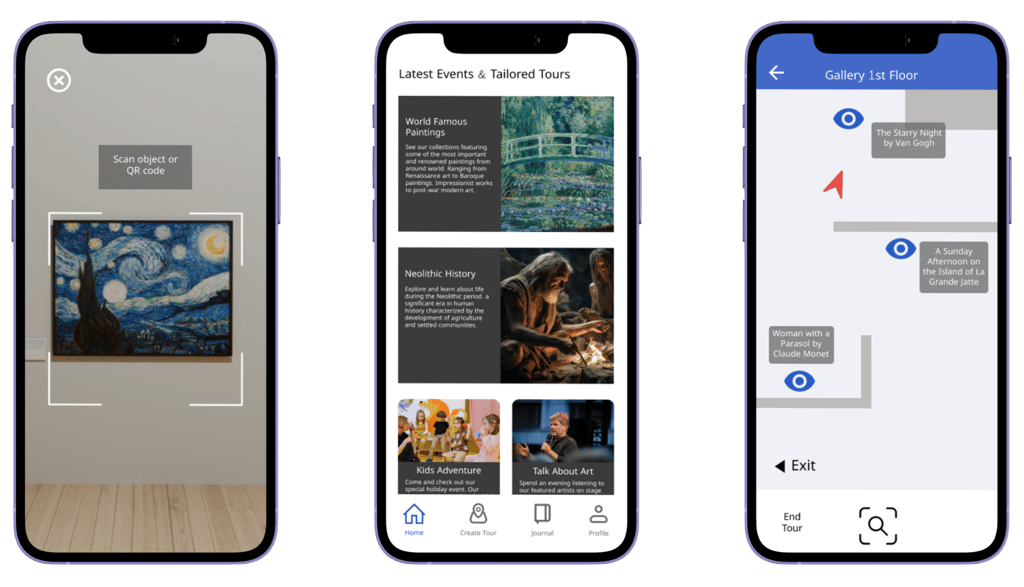
Museum Journal is a mobile museum companion app designed to guide visitors through curated, self-paced tours using their own smartphones. With features like interactive mapping, AR-powered artefact scanning, and a digital journal, the app enhances engagement and allows users to create personalised cultural journeys.
Problem Statement
Traditional museum visits can be passive and lack personalisation, especially for younger or tech-savvy visitors. Current tools like static maps and audio guides often fail to adapt to individual interests. There is a need for a dynamic, user-led digital solution that enhances exploration, learning and retention; whilst providing museums cost effective way to implement digital technology.
Aims & Objective
To design an intuitive mobile guide tailored to individual museum visitors.
To implement features that support learning, reflection and accessibility.
To evaluate the app's usability through iterative prototyping and testing.
To explore how digital tools can support cultural engagement beyond physical exhibits.
Design Method
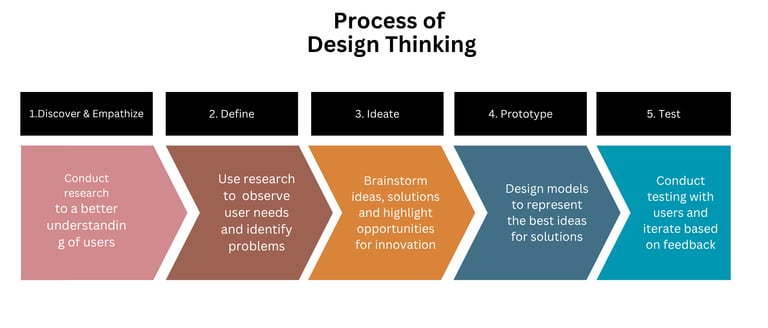
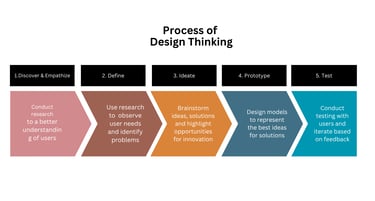
Design Thinking is the main framework used in guiding every stage of this project. This allows one to create a design that is highly usable, accessible and appealing to museum visitors. Studies has shown the effectiveness of using Design Thinking in contributing to digital transformation of museums.
Discover & Empathize
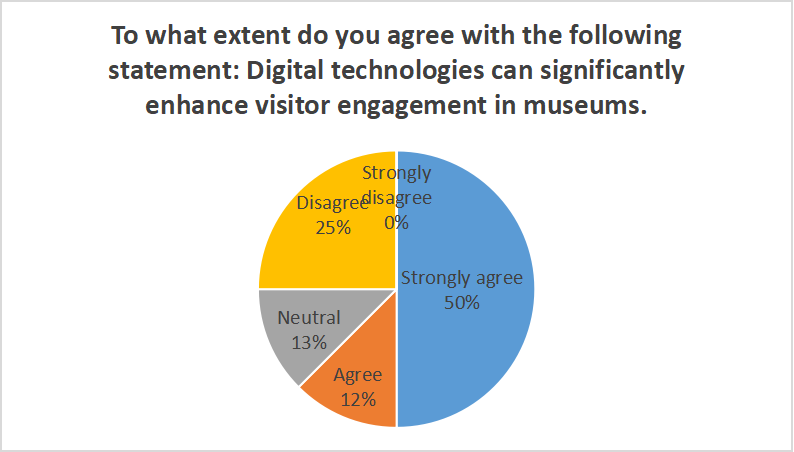
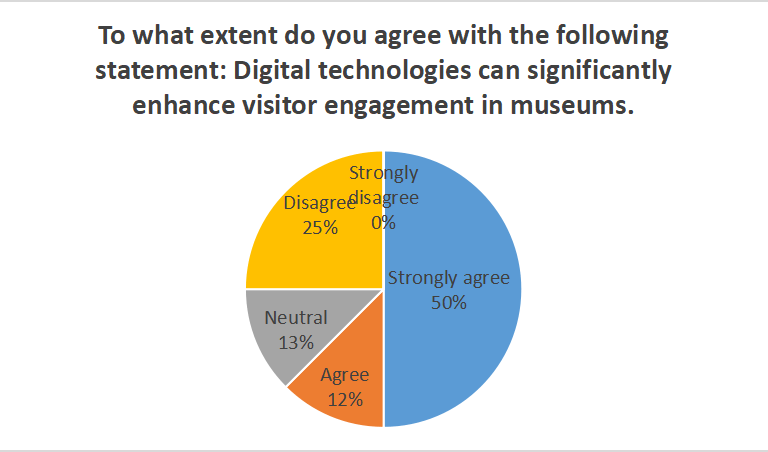
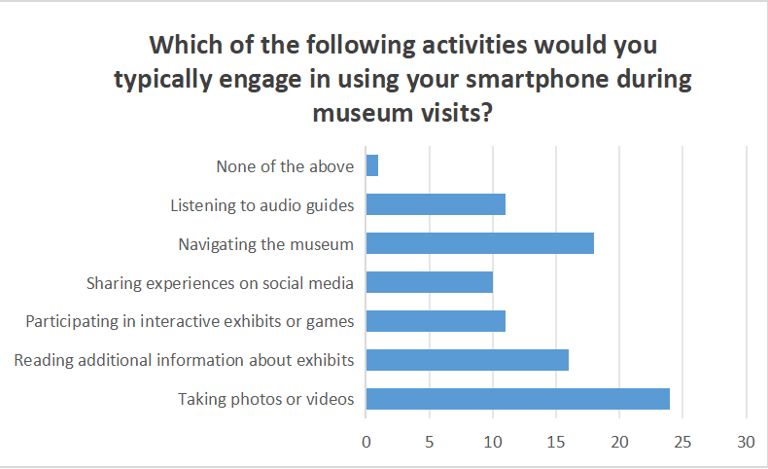
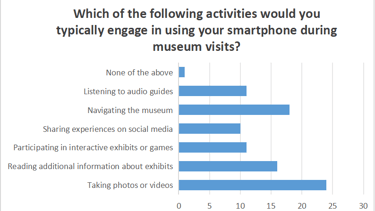
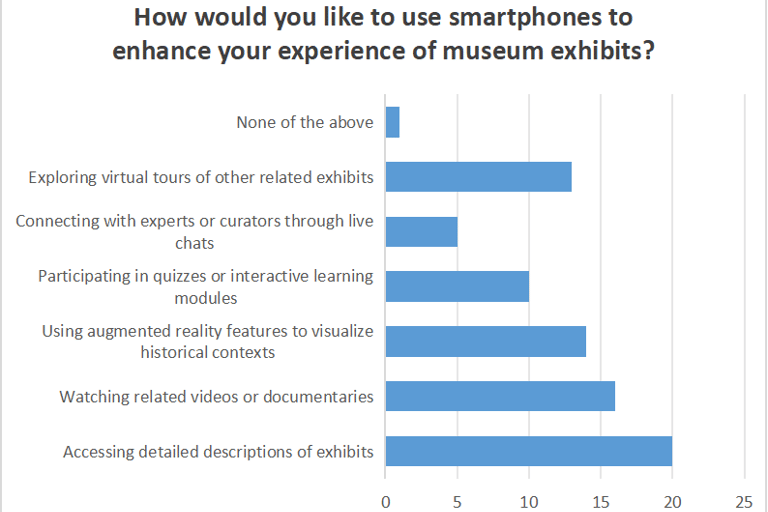
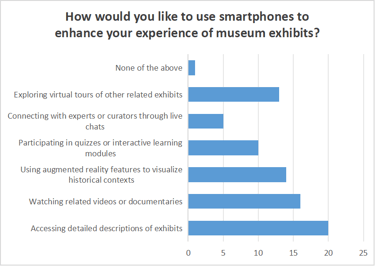
Stratified Sampling technique was used to ensure the participants are relevant to the research objective whilst also consist of a diverse range of demographics within selected groups. Surveys were conducted which strategically targeted the main user groups, comprising both museum visitors and museum workers. This was carried out online via internet forums for museum-related groups, namely Reddit and Facebook groups.
Define
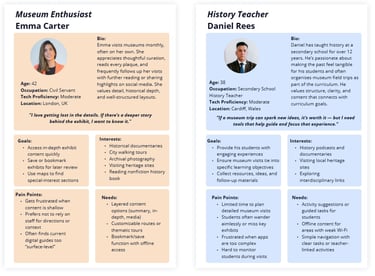
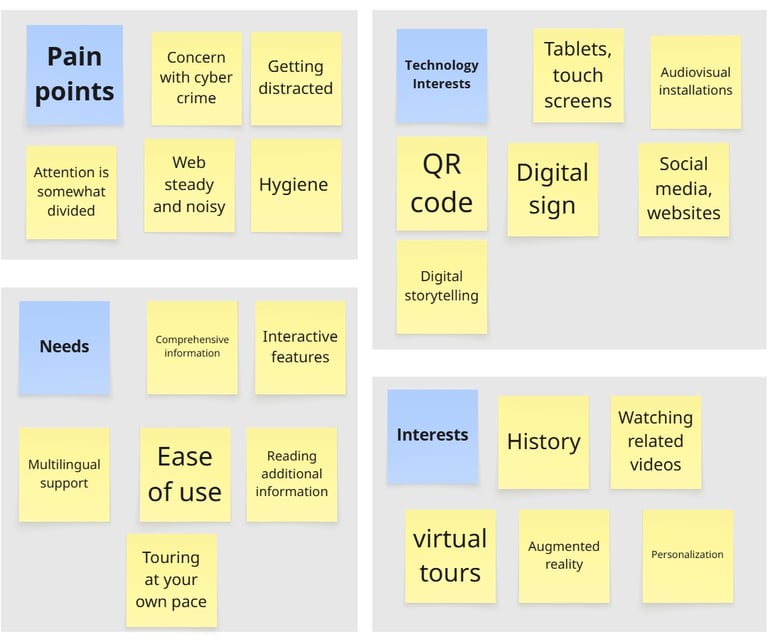
All of the qualitative data from the user and stakeholders, were collected and noted based on the frequency of occurrence. By grouping related observations, quotes, and insights from users into clusters based on themes or shared meanings i.e. interest, needs and technology interests, this was useful to identify emerging patterns and core issues.
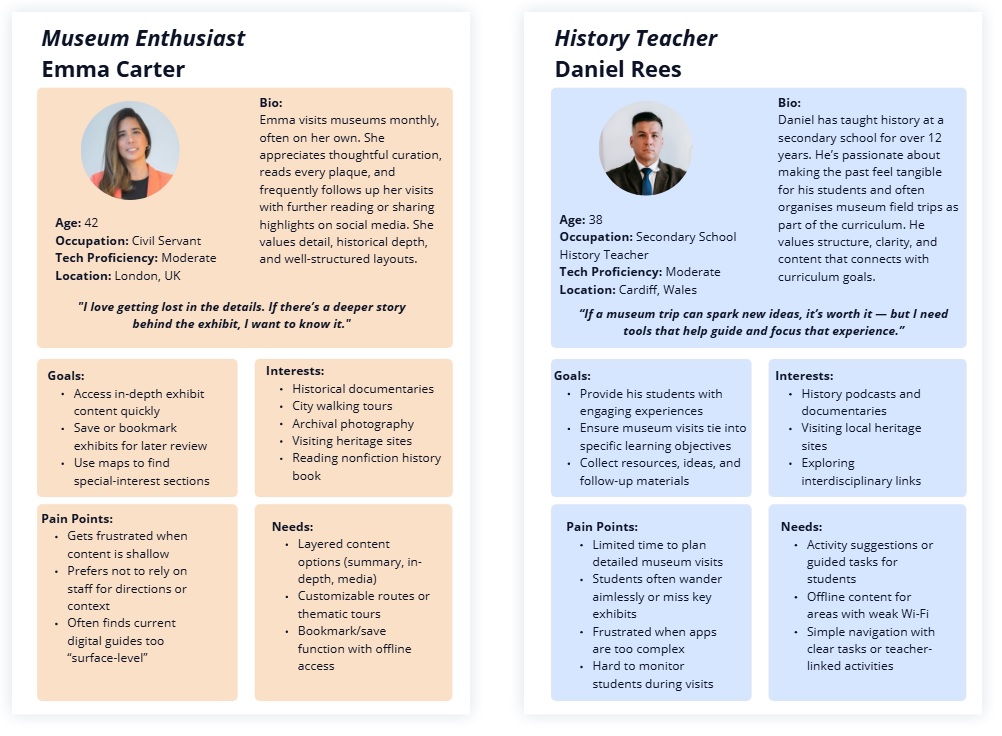
Personas were generated to represent typical museum visitors based on observed behaviours, goals, motivations, and pain points gathered through interviews, observations, and surveys. Instead of designing for a vague "user," personas are valuable for implementing design with empathy for real people, such as a tech-savvy student visiting for research, or a foreign tourist who needs language assistance. These personas serve as reference points throughout the design process.
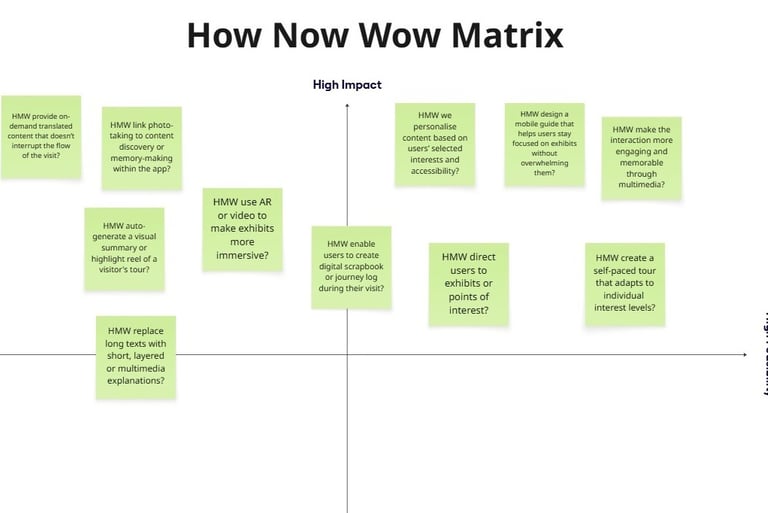
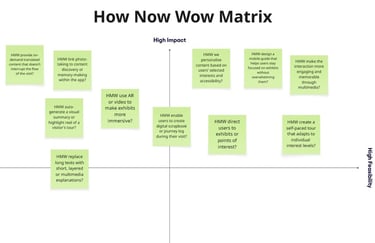
How Might We questions are fed into the How Now Wow matrix, this was used to prioritise the HMW questions. By arranging HMW questions in this way, this helped quickly identify which ideas to pursue first, balancing innovation with practicality. It supports strategic decision-making before entering the Ideate phase and ensures focus on solutions that are both impact and feasible.
Ideate
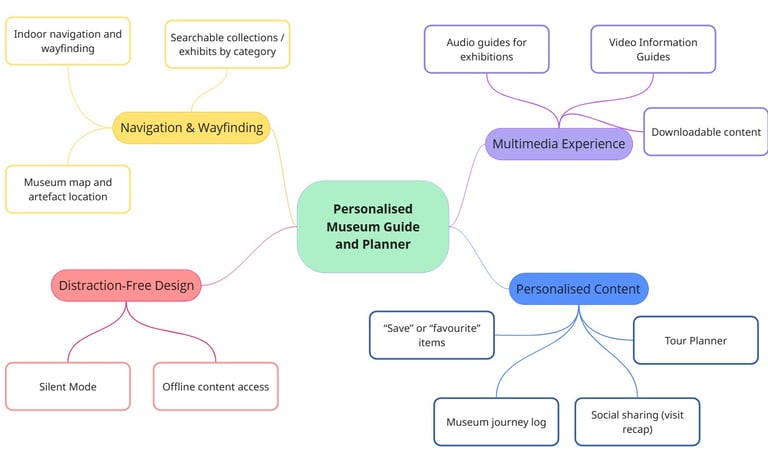
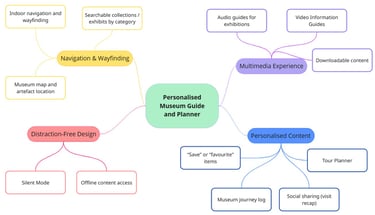
All related ideas, features, and user were branched out from the central concept, which are based on a wide range of possible solutions between each of the themes. This helped organise different ideas in a non-linear way, making it easier to clarify and select ideas for the prototype
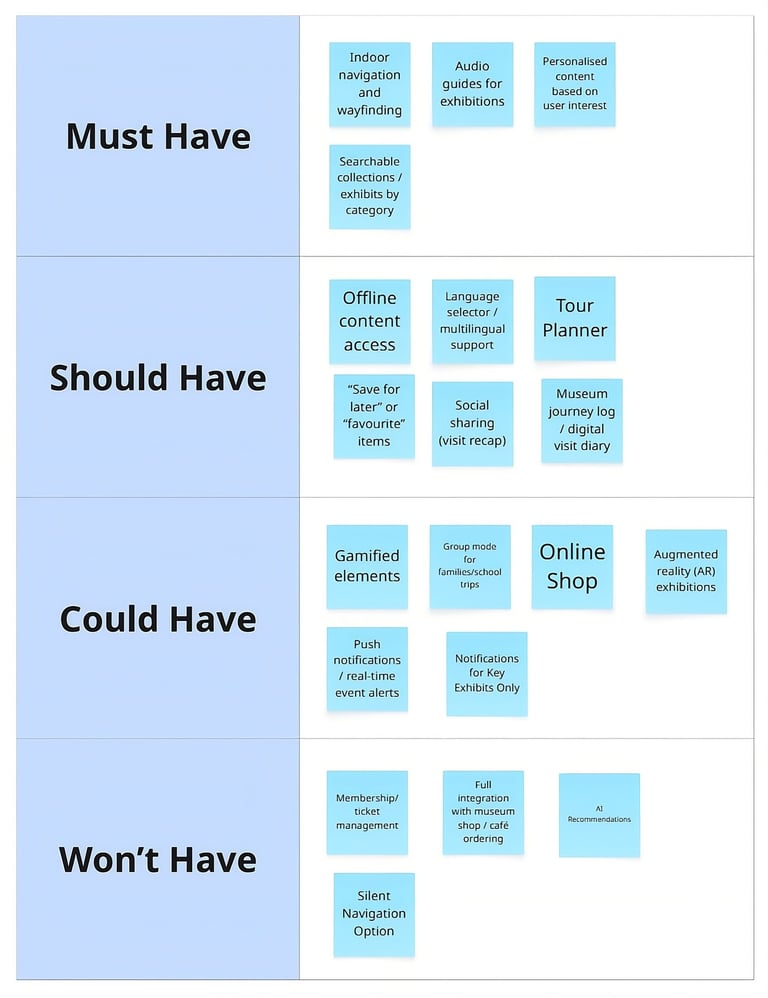
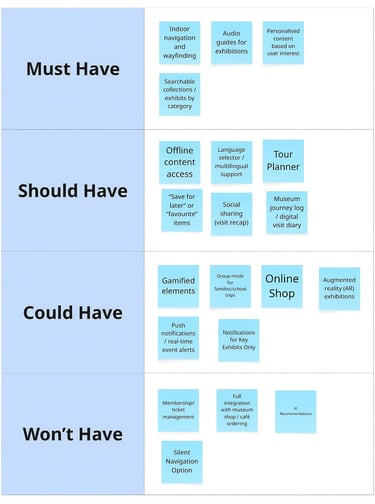
Solutions were arranged using the MoSCoW method. This stage was to prioritize features and ideas generated from brainstorming. It categorizes concepts into four groups: Must-have, Should-have, Could-have and Won’t-have. This has allowed more focus on delivering core solution first while narrowing down the scope of ideas effectively.
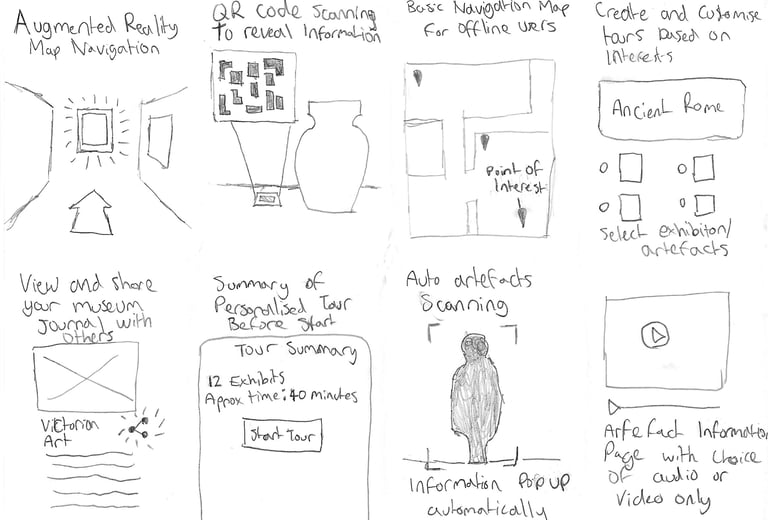
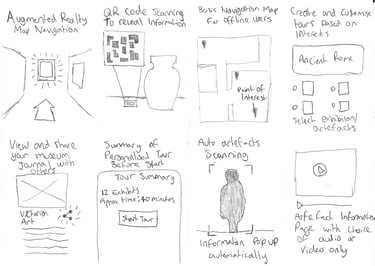
After generating broad ideas, the next step was to narrow down and rapidly explore specific solutions using the Crazy 8 method. While mind mapping helped identify ideas and features that tackles user needs, Crazy 8 translated those concepts into quick, visual sketches. By developing sets of eight distinct ideas in a short time, it helped transform abstract concepts from the mind map into tangible interface ideas, layouts and interactions
Design & Prototypes
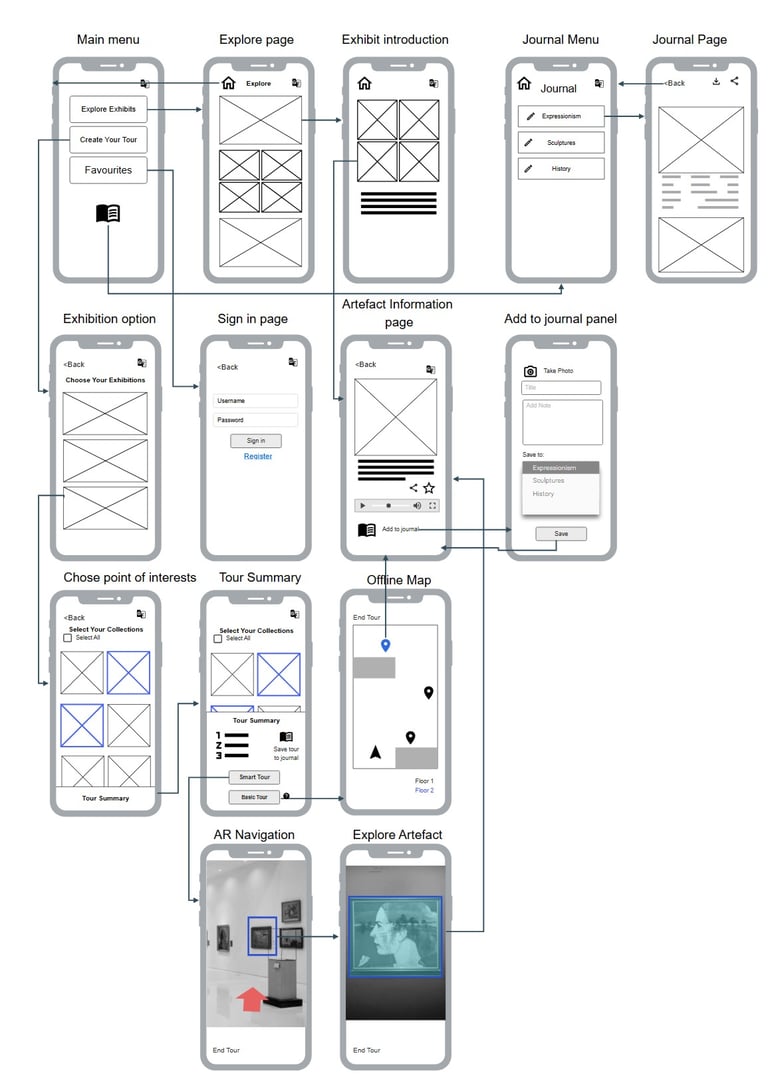
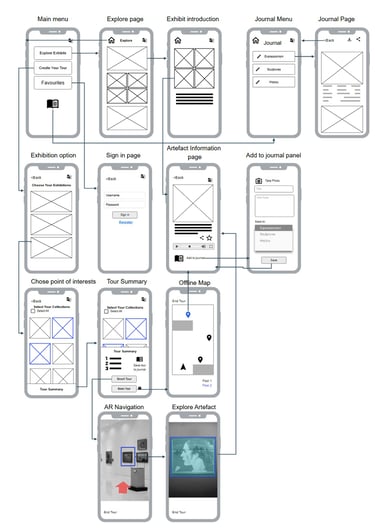
Low-fidelity prototype wireframes were created to quickly visualize the core structure and user flows of the museum guidance app. Mapping out key features; such as navigation, exhibit content and the user journal log without focusing on visual design.
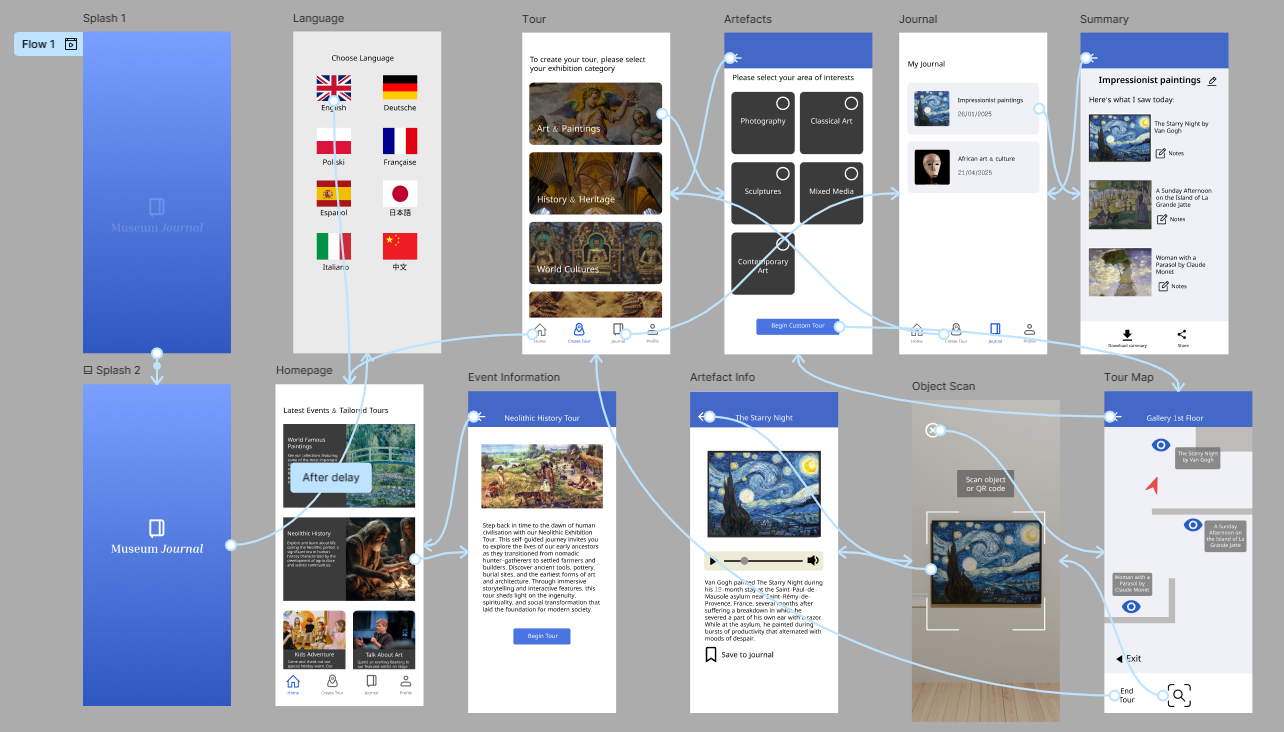
After testing and refinement, the design process has led to the high-fidelity prototype of the museum guidance app; the Museum Journal. The Museum Journal system was designed to effectively support the BYOD (Bring Your Own Device) model by allowing users to personalise their experience by accessing key museum features including customisable self-guided tours, directly from their smartphones.
User Testing
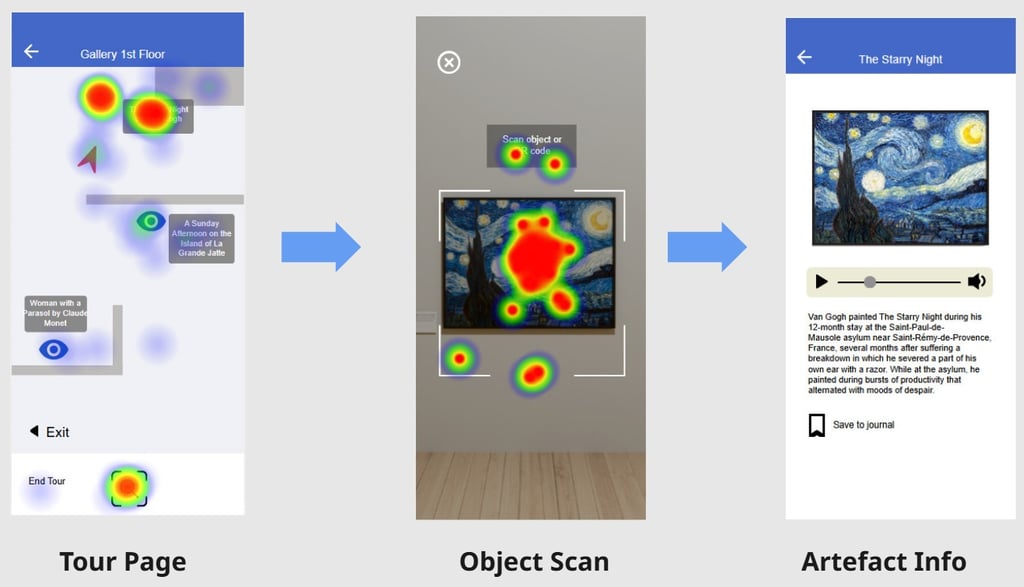
The usability testing of the high-fidelity prototype provided valuable insights into how users interact with Museum Journal in relation to navigation, artefact interaction, journaling, and overall engagement. The data collected through Maze included both performance metrics and open-ended user feedback, enabling a balanced understanding of how well the app met its usability goals.
The heatmap represents how users interacted with the app during the test.
Conclusion
The development and evaluation of the Museum Journal app show strong potential for enhancing museum visits through personalised digital engagement. Usability testing of three key tasks—custom tour creation, artefact scanning, and journal summary download—produced high success rates and quick completion times, indicating that users could interact with the core features effectively.
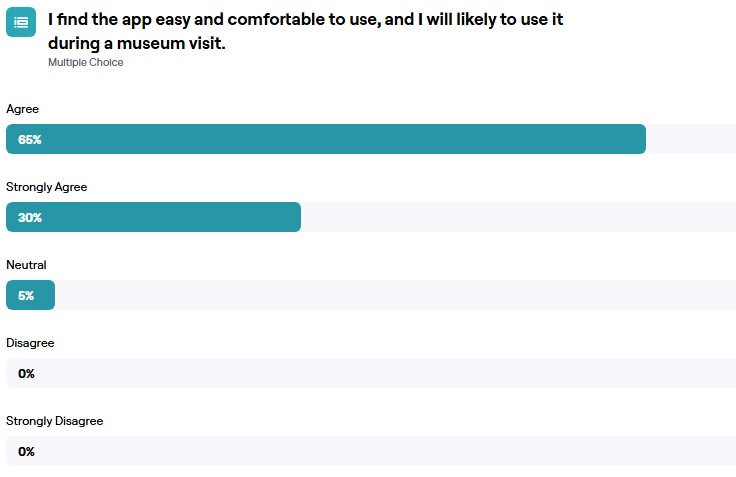
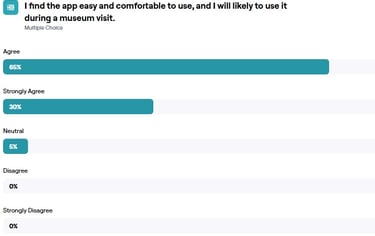
Overall a substantial 95% of the respondents expressed positive sentiment towards the app's usability and future use.
Contact
adee82@hotmail.co.uk
+447709042165
© 2026. All rights reserved.